 Admin
AdminI spent years dealing with bloating after almost every meal, chalking it up to just “how my stomach is,” until I actually started paying attention to what was going into my gut versus what wasn’t. Learning how to improve gut health naturally through diet, rather than reaching for another antacid, genuinely changed how I feel day to day.
Here’s what actually worked, based on both research and a fair bit of personal trial and error.
Why Gut Health Affects More Than Just Digestion
The gut isn’t just responsible for breaking down food — it plays a role in immunity, mood, and even skin health, which surprised me when I first read into it.
Direct answer: Gut health affects overall wellbeing because roughly 70% of the immune system resides in the gut lining, and gut bacteria produce neurotransmitters like serotonin, meaning poor gut health can contribute to issues far beyond digestion, including mood and immune function.
Once I connected my constant bloating to my equally constant low energy, the diet changes started feeling less optional and more necessary.
Add Fermented Foods Gradually
This was the single biggest change for me personally, though it needs to be introduced slowly to avoid overwhelming your system.
- Curd or yogurt with live cultures, daily if tolerated well
- Fermented pickles (not the vinegar-based store kind, look for naturally fermented)
- Kanji, a traditional fermented drink, if you can find or make it
- Start with small portions, increasing gradually over 2-3 weeks
I’ve noticed daily curd made a genuinely noticeable difference in my bloating within about three weeks of consistent use.
Increase Fiber, But Do It Slowly
Fiber feeds beneficial gut bacteria, but jumping in too fast causes exactly the bloating you’re trying to avoid.
- Add one new fiber-rich food every few days, not all at once
- Include a mix of soluble fiber (oats, fruits) and insoluble fiber (vegetables, whole grains)
- Drink adequate water alongside increased fiber intake
- Legumes like dal are excellent, though introduce gradually if you’re not used to them
Picture your gut bacteria like a garden — sudden, large amounts of new “food” can overwhelm the system rather than helping it thrive gradually.
Reduce Processed Sugar and Refined Carbs
Direct answer: Excess processed sugar feeds harmful gut bacteria and yeast while starving the beneficial bacteria that support digestion, which over time can contribute to an imbalanced gut microbiome, bloating, and increased inflammation throughout the body.
This doesn’t mean cutting sugar entirely, which honestly isn’t realistic for most people. It means being more intentional about how often processed sweets show up in a typical week.
Stay Consistently Hydrated
Water plays a bigger role in digestion than most people realize, particularly for preventing constipation, which itself disrupts overall gut balance.
- Aim for adequate daily water intake, more in hot climates
- Herbal teas like ginger or peppermint can support digestion too
- Avoid excessive caffeine, which can dehydrate and irritate the gut lining
Prebiotic Foods Worth Adding
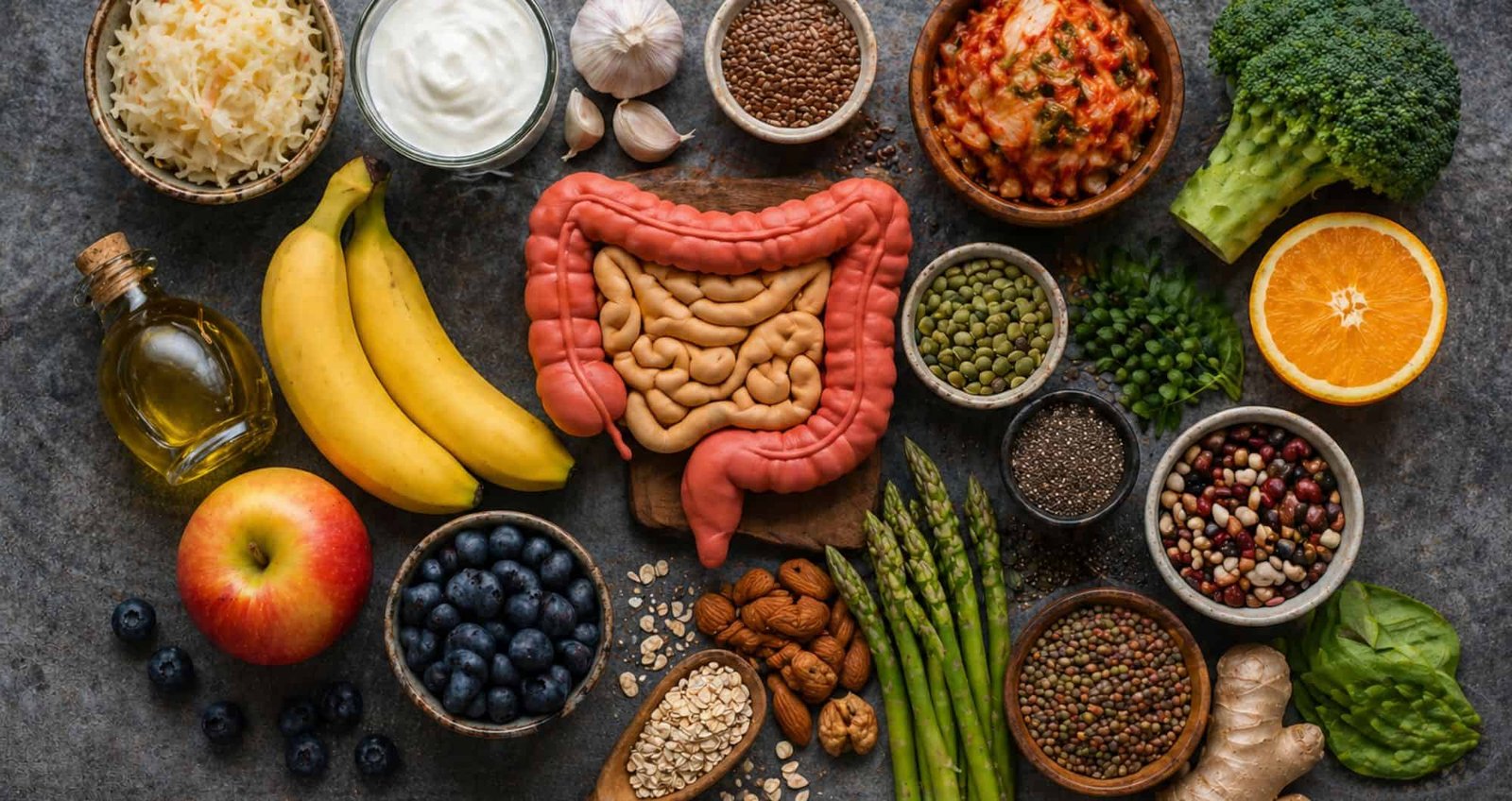
Prebiotics feed the good bacteria already in your gut, working alongside probiotic foods like curd for a more complete effect.
- Garlic and onions, used generously in everyday cooking
- Bananas, especially slightly underripe ones
- Oats and whole grains
- Leafy greens like spinach
Whether you get these through food or supplements, whole food sources tend to provide more consistent, gradual benefit than concentrated supplement forms alone.
Managing Stress for Gut Health
This connection surprised me initially, but stress genuinely affects gut function through what’s often called the gut-brain axis.
- Chronic stress can alter gut bacteria composition over time
- Eating in a rushed, stressed state affects digestion efficiency
- Slowing down at mealtimes, even just eating without screens, genuinely helps
FAQ
How long does it take to improve gut health through diet? Generally 4-6 weeks of consistent dietary changes before noticeable improvement in digestion and bloating.
Are probiotic supplements necessary if I eat fermented foods? Not necessarily — whole food sources like curd and fermented pickles often provide sufficient benefit for most people.
Can gut health affect skin issues like acne? There’s growing evidence connecting gut imbalance to skin inflammation, though it varies by individual and isn’t the sole cause of acne.
Should I avoid dairy for better gut health? Not universally — fermented dairy like curd is often beneficial, though some individuals with lactose sensitivity may need to adjust intake.
Is bloating always a sign of poor gut health? Not always, but persistent bloating is often connected to gut imbalance, food intolerances, or eating habits worth examining.
Can improving gut health help with energy levels? Yes, since nutrient absorption and inflammation levels connected to gut health can significantly affect overall energy.
Conclusion
Learning how to improve gut health naturally doesn’t require expensive supplements or an elaborate elimination diet — it starts with small, consistent changes like adding fermented foods, increasing fiber gradually, and staying hydrated. Give your gut a few weeks to adjust to these changes before expecting dramatic results; this is genuinely a slow-and-steady kind of improvement.